

SEO takes months rather than days: Google Search Central’s guidance on hiring an SEO consultant or agency gives a general timeframe of 4 months to a year from making changes to starting to see benefits. That’s a planning reference for your small business website in 2027, not a promise of rankings, inquiries, or sales. That also includes work you control—getting useful blogs and pages published as well as fixing issues customers don't see.
- How long does it take for SEO to work for a small business website? Plan in months, not days.
- Google Search Central (the official Google resource hub) gives a general timeframe of 4 months to a year after changes begin.
- Track relevant search impressions, clicks, and inquiries separately; they tell you different things and where to focus.
- Kathy G and Purple Essence is here for women brand owners seeking a coordinated website, social media, and digital marketing strategy.
How long does it take for SEO to work for a small business website?
Use 4–12 months as a general planning window, not a deadline for success. Google Search Central’s hiring guidance describes the time from when you start changes to seeing small benefits. What it doesn’t say is every website will reach its goals within that window (and if anyone tells you that, be sure to ask many questions about how that occurred along with their examples).
There’s a big difference between a search engine finding your updated page and a customer finding your brand. And then, there’s another difference between that customer visiting and then filling out that contact form.
I’m Kathy G. At Purple Essence, we'll look at how your website, messaging, and social media work together, rather than treating search traffic as the whole story or the only thing to fix.
| Stage | Evidence to look for | What it doesn’t prove |
|---|---|---|
| Discovery and indexing | Your intended page is eligible to appear in search | Ranking for the searches you want |
| Search visibility | Relevant queries that generate impressions | Searchers will choose your page |
| Website visits | Relevant searches producing clicks | Visitors understanding your offer |
| Customer action | Visitors submit suitable inquiries or complete purchases | That every action on your site came from SEO |
Your timeline needs a clear finish line. If “working” means appearing for your brand name, that’s a different goal from earning inquiries from people who haven’t heard of you.
Why this matters before you start waiting
You’ve put real work into your brand. You deserve a clearer answer than “SEO takes time,” (and yes, you'll hear me say that) especially when you’re deciding where to put your attention.
For your 2027 plan, separate implementation time from observing a response. An unpublished service page can’t help customers find that service. A blog draft that's not scheduled hasn’t changed your website.
Then you need to separate visibility from usefulness. More visits aren’t a win if the visitors want something you don’t offer or can’t understand what to do next.
My recommendation is to agree on the goal before creating a timeline. Name the page, the customer need, the change, and the evidence you’ll review. That gives you something concrete to discuss instead of another vague promise.
What does “SEO is working” actually mean?
Start with your customer’s question, not a rank. What would someone search for when they need what you sell but don’t know your name?
A maker selling handmade jewelry or a unique item for the holidays needs pages that explain those products clearly. A service provider needs pages that explain what's available and who it’s for. An artist’s portfolio needs enough context for someone to understand the work and how to contact them. Great pictures may get clicks, but not having an obvious next step after that click leads people to move on.
These aren’t interchangeable goals. Be sure to track progress against the job each page is supposed to do, even if it's basic information through your Google Business/Maps owner's page.
Search visibility: are the right queries appearing?
Google Search Console shows impressions and clicks for searches that bring your website into Google results. Review the query wording, not just the total.
An increase in impressions for an unrelated subject doesn’t demonstrate progress toward your intended audience. Look for searches that match your offers, customer questions, and genuine areas of expertise.
Website visits: are people choosing your pages?
Clicks tell you that someone selected a result. They don’t tell you whether the page answered the question or whether the visitor was a suitable customer.
If relevant impressions grow but clicks don’t, review the search results and your page’s title and description. Check whether your page offers what that searcher expects before rewriting it simply to sound more exciting.
Customer action: does the visit lead somewhere useful?
For a service brand, a suitable inquiry matters more than an unrelated visit. For a product brand, the path to understanding and purchasing the product needs to work.
Check your contact forms, purchase paths, and especially your mobile experience. SEO can bring someone to the door; your website still needs to explain why they should come in. Side note: If you're ready to tackle how SEO can work for your brand, I'd love to chat with you about how the tool, Ryze, can help. I only share what's actually worked for me. And if you're ready to invest a small amount to get your website in full working order, I'd love to share how it's helped me.
Why the SEO timeline varies
The useful question isn’t just how long SEO takes. It’s what needs to change on your website before search visibility can support your goals.
These factors belong in your 2027 planning conversation:
- Indexing access. Search engines need access to pages you want included in search. An accidental indexing restriction needs attention before you judge the page’s performance.
- Search intent. A page needs to answer the question behind the search. A general introduction won’t necessarily satisfy someone looking for a specific service.
- Existing content. Updating a relevant, established page is different work from creating a missing page. Identify which situation you’re dealing with.
- Competition. Review the pages already appearing for your intended searches. They help show the information and choices searchers encounter.
- Implementation. Recommendations need to become published changes. Approval delays, unclear responsibilities, and an unfinished website all affect your schedule.
- Offer clarity. Visibility and customer action are separate goals. A page can attract attention while leaving visitors unsure what you actually provide.
None of these factors supports a guaranteed ranking date. However, they do help you decide what to address first and what evidence to watch for afterward.
What should you do while SEO takes effect?
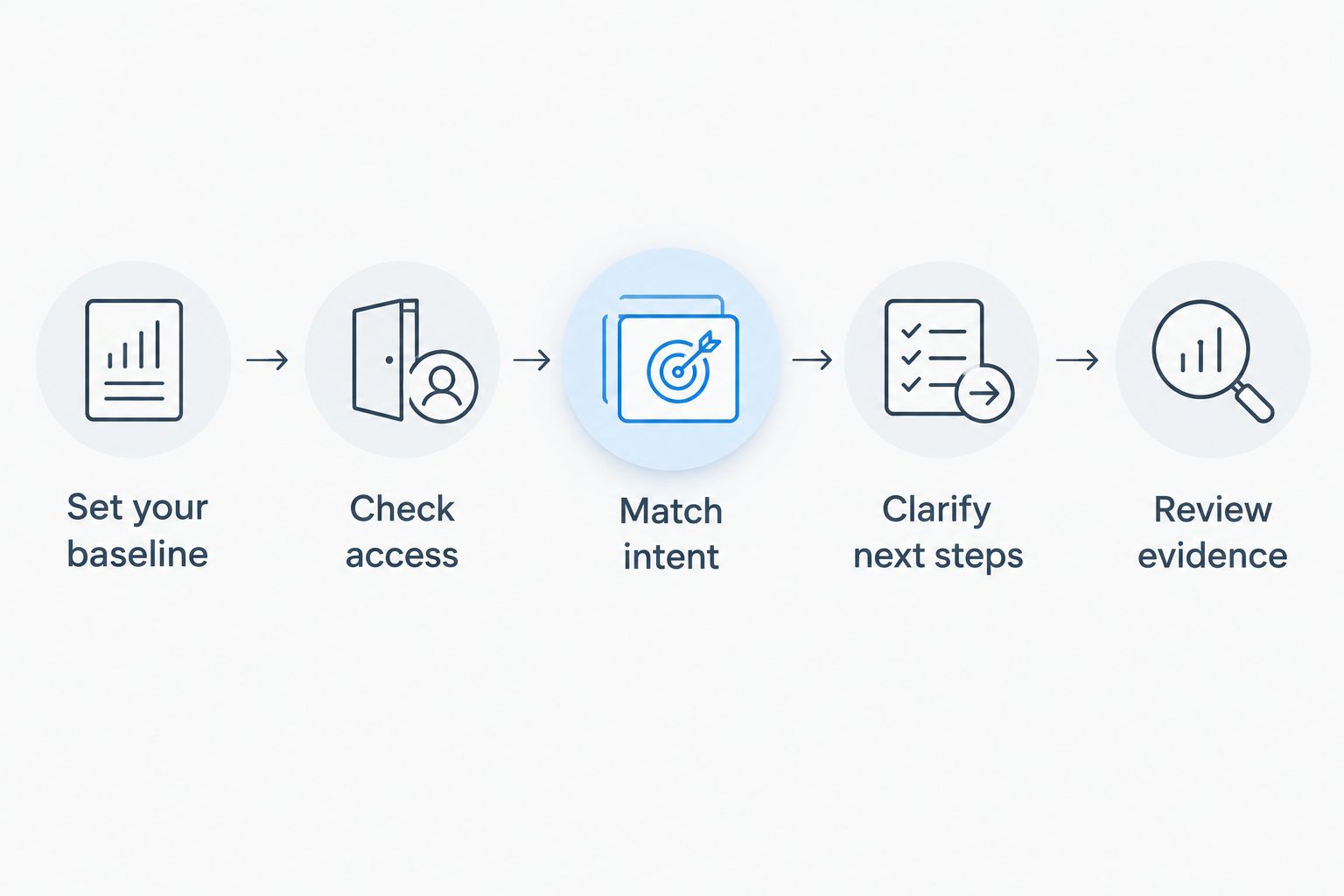
I won't ask you to sit back and hope. I’ll give our work a clear order so you can tell the difference between progress, unfinished tasks, and a plan that needs adjusting.
1. Set your baseline
Before changing a page, record its current purpose and search performance. Note relevant queries, impressions, clicks, and the customer actions you can measure reliably.
Use a 28-day reporting window as a practical review interval, not as a promise that SEO will change within 28 days. Compare equivalent periods and account for seasonal demand where it applies.
For a 2027 baseline, keep a list of major website changes and promotions. This is a key area business owners miss. Otherwise, you’ll struggle to explain what happened when several things changed for the better.
2. Check access
Confirm that the page you want people to find is accessible and intended for indexing. Google Search Console’s URL Inspection tool helps you examine a specific URL’s indexing status.
Don’t assume an indexing request guarantees inclusion or ranking. Fix the underlying access problem when there is one, then continue with the page’s content and purpose.
3. Match intent
Read the page alongside the search you want it to answer. Does it explain the actual service, product, or question clearly enough for someone landing there without context?
Be honest here. A page built mainly to showcase your work might need more explanation before it can help a new customer choose you. Or, it could be as simple as adding one link so they can send you a message.
4. Clarify next steps
Tell visitors what they can do next and what that action is for. Use wording that fits the page rather than giving every visitor the same generic instruction.
Check the path on a phone, too. Read the page, follow the relevant link, and try the form or purchase process yourself. I also ask trusted friends or other business owners to test pages who are not where I am physically. Different places, browsers and a new path can show where more work can be done.
5. Review evidence
Keep a change log and revisit the same measures. Look for relevant query growth, useful clicks, and customer actions—not simply a larger total somewhere on a dashboard.
Give yourself a 90-day planning horizon for organizing work and reviews. That’s a management choice, not a claim that your website will rank within 90 days.
A simple record makes these conversations easier. You don’t need a confusing pile of PDFs; you need to know what changed, why it changed, and what you’re checking next.
Which work should come first?
Choose the work that addresses the problem you can identify. Publishing more pages isn’t a substitute for fixing access, and technical cleanup isn’t a substitute for explaining your offer.
| Approach | Best for | Benefit | Limitation |
|---|---|---|---|
| Technical fixes | Pages with access or indexing problems | Removes obstacles to discovery and indexing | Doesn’t make unclear content useful |
| Content improvements | Pages that don’t answer relevant customer questions | Makes the page more relevant and understandable | Doesn’t guarantee rankings or demand |
| Customer-path improvements | Visitors who struggle to understand or act | Makes the next step clearer | Doesn’t generate search visibility by itself |
| Strategy review | Disconnected website, social media, and messaging | Helps set priorities across your digital presence | The resulting decisions still need implementation |
You don’t have to tackle everything at once. Start with the obstacle that blocks the next useful step.
Purple Essence is best for women brand owners seeking coordinated website, social media, and digital marketing strategy. That’s a good fit when your concern reaches beyond rankings. I get where you are because I'm a small business owner myself. I love helping other women succeed online and feeling empowered with what they do.
Can a small business get SEO results faster?
You can remove avoidable delays, but you can’t set a search engine’s timetable. Publishing approved changes, fixing access problems, and making your pages useful are actions within your control.
I’d start with a focused improvement rather than a rush to publish everything. Choose an important page, identify the customer question it should answer, and make the next step clear.
Don’t confuse activity with progress. Changing titles repeatedly or adding unrelated articles gives you more work without establishing whether you’ve addressed the original problem.
Should you stop SEO if nothing changes after a few months?
Review the work before deciding to stop or continue. Check whether changes were published, whether the intended pages are indexed, and whether the searches match your offer.
Then ask what “nothing” means. No relevant impressions, no clicks, and no inquiries are different problems and need different responses.
If the explanation is always “wait longer,” ask for a clearer account of what changed and what evidence supports the next recommendation. Patience needs a plan attached to it.
Should you request a consult or an audit first?
Start with a consult with me when you’re unsure which problem needs attention. You don’t need to diagnose your own website before asking for help.
My preferred first step at Purple Essence is a conversation about your brand. We can talk about what feels disconnected or frustrating and whether an audit or strategy work fits what you need; direct audit inquiries are welcome, too.
That conversation has a practical limit, though. Discussing your situation isn’t the same as implementing changes. The useful outcome is choosing the next step that makes sense, not promising a ranking date.
Request a consult with Kathy G
Let’s talk about your brand before choosing an audit or strategy work.
FAQ
How long does SEO take for a small business website in 2027?
Google Search Central’s general guidance gives a timeframe of 4 months to a year from starting changes to starting to see benefits. For your 2027 plan, treat that as context rather than a guarantee of rankings, inquiries, or sales.
Does the SEO timeline start when I hire someone?
The useful starting point is when changes begin, not simply when you hire someone. Record publication and implementation dates so you can distinguish unfinished work from time spent observing results.
Can SEO work if my website is mostly a portfolio?
A portfolio can support search visibility when its pages give search engines and potential customers useful context. Explain what you create, who it’s for, and how someone can take the next step.
How often should I check my SEO results?
A 28-day reporting window is a practical review interval, not a deadline for improvement. Review relevant queries, clicks, and customer actions together, and compare equivalent periods.
Does more website traffic mean my SEO is working?
More traffic alone doesn’t prove that SEO is helping your brand. Check whether visitors arrive through relevant searches and take actions that match your goals.
Can anyone guarantee first-page rankings by a specific date?
No provider can guarantee Google rankings by a specific date. Ask for clear priorities, implementation responsibilities, and evidence-based reporting instead.
Should I request an audit from Kathy before a consult?
A consult is the preferred first step at Purple Essence. I’d rather talk with you about your brand before choosing audit or strategy work. They are similar but a different focus. We’ll decide what’s best within 20 minutes.
One last thing
Before you start any work or rewrites, review your most important offer page (usually your Services page) as if you’ve never heard of your brand (or have someone else do that for you). Can you explain what’s available, who it’s for, and what to do next without opening another tab?
If not, start there. You’re the expert in your craft; your website needs to make that expertise understandable to someone meeting you for the first time.
Related guides
- Why your creative website needs more than a portfolio
- Small business marketing consultant costs
- Before you buy another marketing course
Recent Comments